
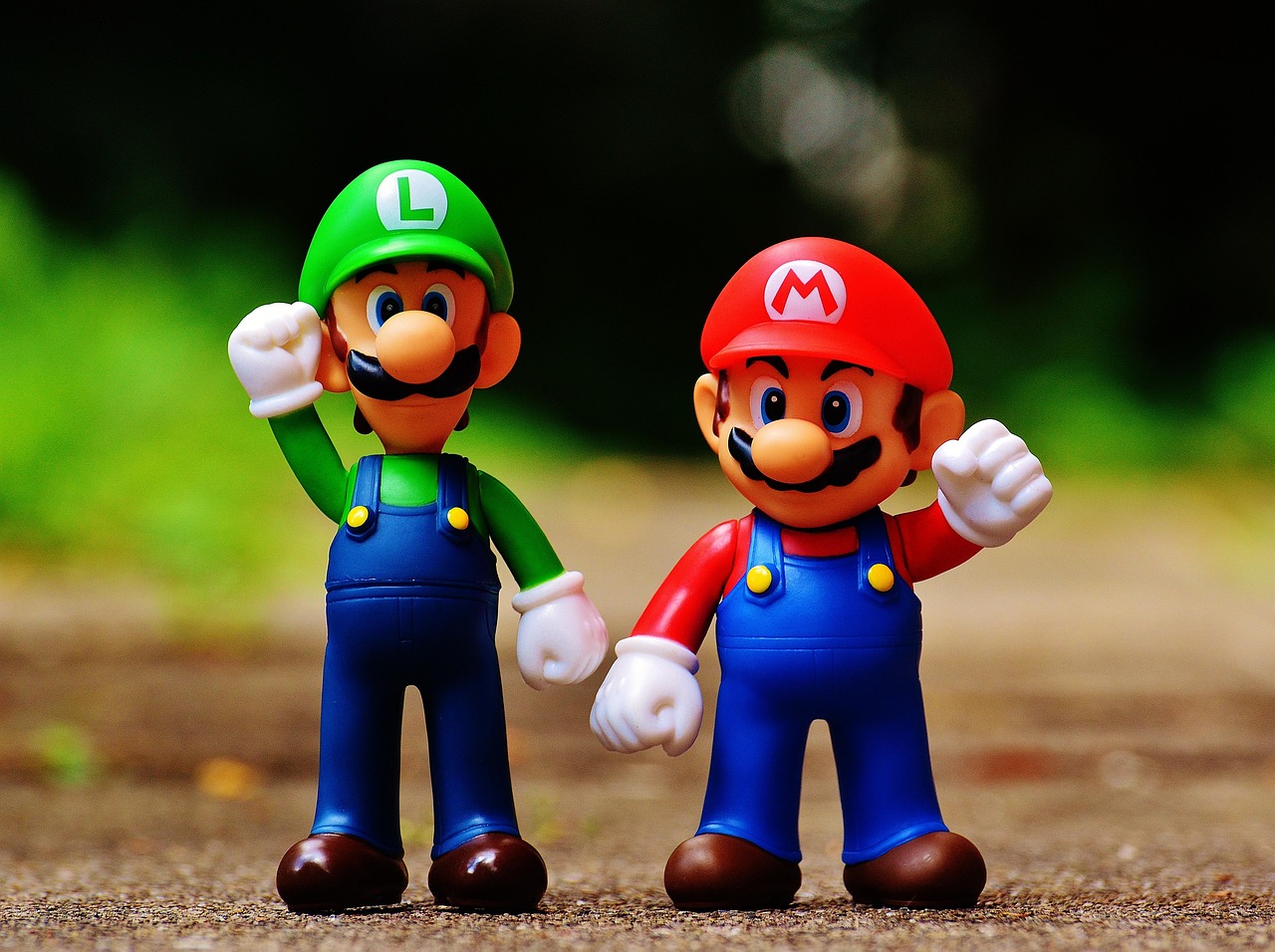
The pixelated castles, the iconic jump sounds, the unforgettable melodies – for millions, the mere mention of classic Nintendo evokes a rush of nostalgia and a deep appreciation for the foundational experiences of video gaming. Long before high-definition graphics and sprawling open worlds, Nintendo laid the groundwork for interactive entertainment, crafting universes that captivated generations and defined the very essence of play. From the humble 8-bit beginnings to the pioneering leaps into 3D, classic Nintendo consoles and their legendary game libraries continue to hold a special place in the hearts of gamers worldwide. Join us as we journey back through time to explore the indelible legacy and enduring charm of Nintendo’s golden age.
Nintendo didn’t just enter the video game market; it rescued it from collapse and redefined what a home console could be. The innovations and iconic titles from its early days set a standard that still resonates today.
The Nintendo Entertainment System (NES): Rescuing the Industry
In the mid-1980s, the video game industry was reeling from a major crash. Enter the Nintendo Entertainment System (NES) in North America, a console that would not only revive the market but also establish many of the conventions we take for granted today. Launched as a “toy” to avoid retailer skepticism, its impact was anything but child’s play.
-
- Revolutionary Controller: The D-pad (directional pad) became the industry standard, offering precise digital control that was intuitive and responsive.
-
- Bundled Excellence: The console’s bundle with Super Mario Bros. proved irresistible. This game alone sold over 40 million copies, establishing the platformer genre and showcasing the potential of home gaming.
-
- Third-Party Licensing: Nintendo implemented a strict licensing system, ensuring quality control over games developed by external companies, a stark contrast to the unregulated market that led to the crash.
-
- Iconic Franchises Born: The NES was the birthplace of numerous enduring series.
- The Legend of Zelda (1986): Pioneered open-world adventure, non-linear progression, and battery-backed save files.
- Metroid (1986): Introduced atmospheric exploration, female protagonists (Samus Aran), and a unique blend of action and puzzle-solving.
- Castlevania (1986): Defined the gothic horror platformer genre with its challenging gameplay and memorable soundtrack.
Actionable Takeaway: For a true appreciation of gaming history, experiencing the NES’s foundational titles reveals how basic mechanics and clever level design can create endlessly replayable experiences.
Game Boy: Portable Revolution
While home consoles dominated living rooms, Nintendo saw potential in gaming on the go. The Game Boy, launched in 1989, wasn’t the most powerful handheld, but its smart design choices made it a global phenomenon.
-
- Durability and Battery Life: With its robust build and exceptional battery life (often lasting over 10 hours on four AA batteries), the Game Boy was truly portable and reliable.
-
- Bundled Success: Much like the NES, the Game Boy found its killer app in a bundled game: Tetris. Its addictive puzzle gameplay appealed to a massive demographic, from casual players to hardcore enthusiasts.
-
- Connectivity: The “Link Cable” allowed for multiplayer experiences, a groundbreaking feature for handhelds, famously utilized by Pokémon Red and Blue (1996), which became a cultural phenomenon, selling over 30 million units worldwide and cementing the Game Boy’s legacy.
-
- Diverse Library: Beyond Tetris and Pokémon, the Game Boy offered a vast array of genres, including platformers like Super Mario Land, RPGs, and sports titles, making it accessible to all ages.
Actionable Takeaway: The Game Boy teaches us the value of practicality and ingenious game design over raw power. Consider how its constraints fostered creativity in game development.
The 16-bit Powerhouse: Super Nintendo Entertainment System (SNES)
Following the tremendous success of the NES, Nintendo elevated its game with the Super Nintendo Entertainment System (SNES) in 1990 (1991 in North America). This 16-bit console pushed visual and auditory boundaries, ushering in a golden age of game design.
Graphics & Sound: Pushing Boundaries
The SNES was a technical marvel for its time, especially compared to its predecessor. It offered a richer, more vibrant experience that allowed developers to tell more immersive stories and create more complex worlds.
-
- Mode 7 Graphics: A hardware capability that allowed background layers to be rotated and scaled, creating the illusion of 3D depth and movement. This was famously used in games like Super Mario Kart and F-Zero, giving them a revolutionary sense of speed and perspective.
-
- Superior Sound Chip: Developed by Sony, the SNES’s audio hardware delivered high-quality, rich stereo sound. This allowed for more complex musical compositions and effective sound effects, enhancing immersion significantly. Koji Kondo’s iconic scores for Mario and Zelda reached new heights here.
-
- Vibrant Color Palettes: With up to 256 colors on screen from a palette of 32,768, SNES games boasted visually stunning and detailed sprites and environments.
Actionable Takeaway: The SNES demonstrated how significant technical upgrades could dramatically enhance gameplay and storytelling. Notice how its graphical effects still hold up aesthetically, a testament to good art direction.
Masterpiece Library: A Golden Age
The SNES is often cited as having one of the greatest game libraries of all time, home to titles that are frequently ranked among the best ever made, regardless of era.
-
- Super Mario World (1990): Launched with the console, it introduced Yoshi, expansive levels, and secret exits, becoming a benchmark for platforming excellence. It sold over 20 million copies.
-
- The Legend of Zelda: A Link to the Past (1991): Revolutionized action-adventure with its dual-world mechanic, intricate dungeons, and compelling narrative, selling over 4.6 million units. Many consider it the pinnacle of 2D Zelda games.
-
- Super Metroid (1994): Perfected the Metroidvania genre with its unparalleled atmosphere, intricate map design, and satisfying power-up progression.
-
- Chrono Trigger (1995): A collaborative RPG masterpiece featuring time travel, multiple endings, and an innovative combat system, often hailed as one of the greatest JRPGs of all time.
-
- Donkey Kong Country (1994): Showcased groundbreaking pre-rendered 3D graphics that pushed the SNES’s capabilities to their absolute limit, delivering a visually stunning and challenging platformer.
Actionable Takeaway: Explore the SNES’s RPG offerings; they demonstrate how deep narratives and strategic gameplay were masterfully integrated into the 16-bit era, influencing countless games that followed.
Entering the Third Dimension: Nintendo 64 (N64)
As the gaming world looked towards 3D, Nintendo once again led the charge with the Nintendo 64 (N64), launched in 1996. This console marked a pivotal shift in game design and player interaction.
Pioneering 3D Gaming
The N64 was built specifically for 3D polygonal graphics, a bold move that set it apart from its CD-ROM-based competitors. It introduced innovations that would become standard across the industry.
-
- The Analog Stick: The N64 controller’s central analog stick provided unprecedented fluid, 360-degree movement, essential for navigating 3D environments. This was a game-changer for titles like Super Mario 64.
-
- Super Mario 64 (1996): More than a launch title, it defined 3D platforming. Its innovative camera control, open-ended level design, and precise movement mechanics (thanks to the analog stick) set the template for nearly every 3D game that followed. It sold over 11 million copies.
-
- The Legend of Zelda: Ocarina of Time (1998): Frequently ranked as one of the greatest video games ever made. It translated the epic scope of Zelda into a breathtaking 3D world, introducing features like Z-targeting (lock-on combat) and context-sensitive action buttons, which are now ubiquitous.
-
- Rumble Pak: An optional accessory that provided haptic feedback, adding a new layer of immersion to gameplay, another innovation that became standard.
Actionable Takeaway: Play Super Mario 64 and Ocarina of Time to understand the birth of modern 3D game design. Observe how their control schemes and camera systems, though dated by today’s standards, were revolutionary at the time.
Iconic Multi-Player Experiences
Beyond its single-player masterpieces, the N64 was also a powerhouse for local multiplayer, often featuring four controller ports directly on the console, fostering countless hours of couch co-op and competitive fun.
-
- Mario Kart 64 (1996): Brought the beloved kart-racing series into 3D, offering iconic tracks and chaotic four-player battles that cemented its status as a party game staple.
-
- GoldenEye 007 (1997): Revolutionized console first-person shooters with its innovative controls and legendary four-player split-screen deathmatches. It proved that FPS games could thrive on consoles.
-
- Super Smash Bros. (1999): Introduced a novel fighting game concept featuring iconic Nintendo characters, designed for accessibility and chaotic fun over technical combos. It started a beloved franchise that continues to dominate multiplayer sales.
-
- Wave Race 64 (1996): Demonstrated the N64’s graphical prowess with realistic water physics and fluid jet ski racing, a refreshing take on the racing genre.
Actionable Takeaway: If you have friends, gather them for a session of Mario Kart 64 or GoldenEye 007. You’ll quickly understand the enduring appeal of classic local multiplayer gaming.
The Enduring Legacy and Modern Relevance
The influence of classic Nintendo extends far beyond its original release dates. Its consoles and games continue to shape the industry, inspire new generations of developers, and delight players old and new.
Why Classic Nintendo Still Matters Today
Despite significant advancements in technology, the core appeal of classic Nintendo games remains undiminished. Their design principles, artistic direction, and sheer fun factor transcend generations.
-
- Timeless Gameplay: Many classic Nintendo games boast incredibly tight controls and elegant level design that makes them just as enjoyable today as they were decades ago. They prioritize gameplay over graphical fidelity.
-
- Nostalgia and Comfort: For many, these games represent a cherished part of their childhood, offering a comforting return to simpler times and familiar worlds.
-
- Historical Significance: Classic Nintendo titles are invaluable artifacts in the history of interactive media, showcasing the evolution of game design, technology, and storytelling.
-
- Accessibility: Modern initiatives like the Nintendo Switch Online + Expansion Pack service provide access to libraries of NES, SNES, and N64 games, making these classics easily playable on current hardware. Nintendo has also released “Classic Mini” consoles (NES Classic Mini, SNES Classic Mini) as accessible, plug-and-play tributes.
Actionable Takeaway: Subscribe to Nintendo Switch Online or try one of the Classic Mini consoles to experience these games on modern TVs with minimal fuss. It’s the easiest way to jump in.
Collecting and Preserving Classic Nintendo
For enthusiasts, classic Nintendo isn’t just about playing; it’s about collecting, preserving, and celebrating the physical artifacts of gaming history.
-
- The Joy of Collecting: Acquiring original cartridges, consoles, and memorabilia offers a tangible connection to gaming’s past. Mint condition, factory-sealed games can fetch significant sums, with Wata-graded copies of rare titles reaching hundreds of thousands or even millions of dollars (e.g., sealed copy of Super Mario 64 sold for $1.56 million in 2021).
-
- Emulation vs. Original Hardware: While emulators offer convenience, playing on original hardware provides an authentic experience, including controller feel and visual quirks, that many purists prefer.
-
- Community and Preservation: The retro gaming community is vibrant, focusing on speedrunning, fan translations of Japanese-exclusive titles, and efforts to digitally preserve games and their source code. Organizations like the Video Game History Foundation work to save games from obscurity.
-
- Tips for New Collectors:
- Start with common, beloved titles in good condition.
- Research prices to avoid overpaying.
- Invest in proper storage to protect your collection from dust, light, and humidity.
- Consider flashcarts (like the EverDrive) for playing ROMs on original hardware.
Actionable Takeaway: If you’re interested in collecting, start by visiting local retro game stores or online marketplaces like eBay. Focus on titles you genuinely want to play and protect your investments with good care.
Conclusion
Classic Nintendo isn’t merely a segment of gaming history; it is the bedrock upon which much of modern interactive entertainment stands. From the pixelated wonders of the NES and Game Boy to the 16-bit artistry of the SNES and the groundbreaking 3D worlds of the N64, Nintendo consistently pushed boundaries, fostered creativity, and delivered unparalleled joy. The franchises born in these eras – Mario, Zelda, Metroid, Pokémon – are not just games; they are cultural touchstones that continue to resonate with players young and old. Rediscovering these timeless classics isn’t just a trip down memory lane; it’s an essential journey for anyone who truly loves video games, offering lessons in enduring design, pure fun, and the magic that happens when innovation meets imagination. So dust off that old console, fire up a classic emulator, or subscribe to Nintendo Switch Online – the adventure awaits!